Filed from the circular fertilizer beat
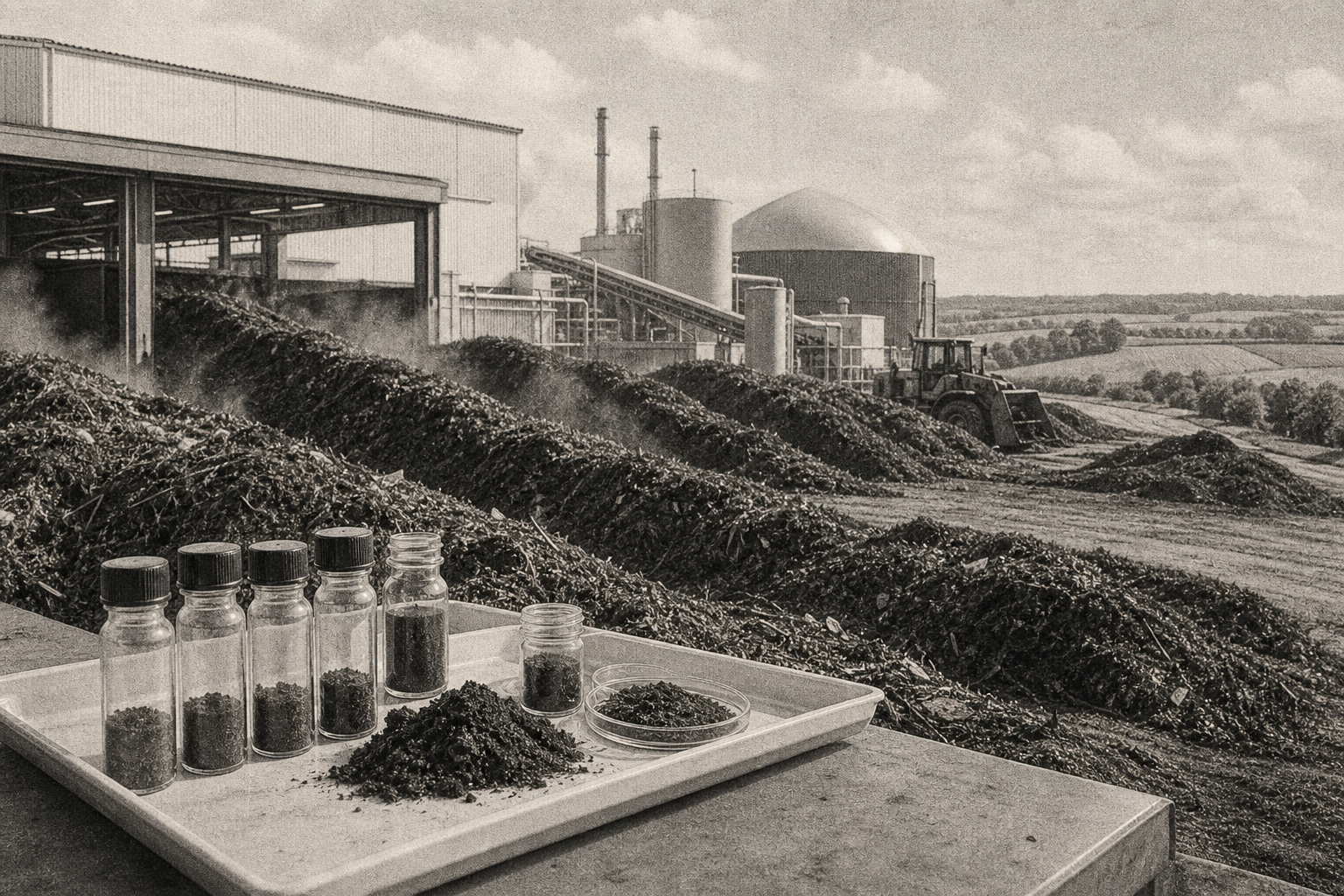
The quiet weakness in the municipal-organics story is not that cities lack composting plants. It is that the final product has to face the field. Compost and digestate only become climate-positive fertilizer substitutes if farmers, regulators, and fertilizer buyers believe the material is safe enough to spread on soil. Heavy metals are one of the hard limits in that trust chain.
Back2Earth's country screen looked at centralized composting and anaerobic digestion facilities that handle municipal organic waste and produce compost, digestate, manure-grade compost, or organic fertilizer. The question was blunt: where does a metal-ion leaching technology have the most convincing first commercial use case?
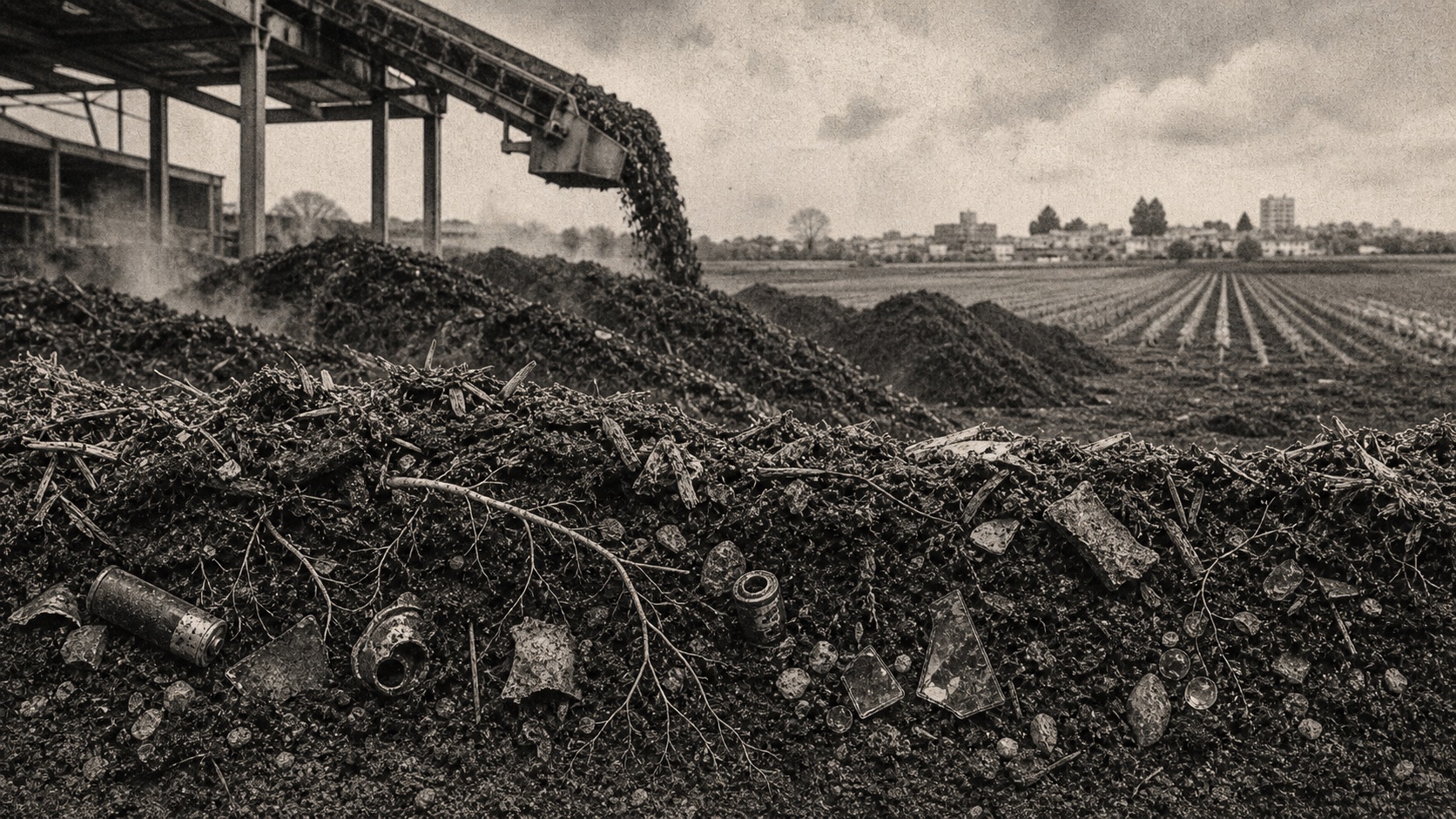
The first customer is not buying recovered cadmium. They are buying the right to sell compost into agriculture without a metals shadow over it.
Back2Earth research verdict
Why This Market Exists
India's Solid Waste Management Rules 2016 set compost limits for arsenic, cadmium, chromium, copper, lead, mercury, nickel, and zinc, and say compost above those limits shall not be used for food crops. That single clause turns chemistry into a market problem.
Europe presents a different pattern. Italy, Germany, Spain, and France have stronger source-separation rules and better official data, but their first buyer is likely to be a premium operator or regulator-facing facility trying to rescue off-spec batches, polish digestate streams, or prove quality under a mature compliance regime.
The operating thesis is therefore narrow and testable: a leaching unit should not be sold as magic treatment for every tonne of organics. It should be sold first as a batch-polishing and quality-assurance step for centralized plants where metals are the difference between a saleable soil input and a rejected liability.
The Ranking
The score weighs municipal-organics scale, centralized facility fit, compost-to-agriculture use, metal-specific pain, strength of public data, and pilot access.
| Rank | Country | Score | Why it belongs | Best wedge |
|---|---|---|---|---|
| 1 | India | 8.6/10 | Very large municipal waste stream, incomplete source segregation, compost/CBG policy support, and explicit food-crop limits. | Off-spec city compost polishing at a centralized compost or CBG plant. |
| 2 | Italy | 8.0/10 | Large source-separated organics stream, 344 biological-treatment plants in 2024, and strong ISPRA/Catasto plant data. | Premium EU validation at an OFMSW compost or integrated AD-compost plant. |
| 3 | Spain | 7.1/10 | Mandatory biowaste separation, a large collection gap, landfill pressure, and fertilizer metal classes. | Upgrade compost or digestate batches to higher fertilizer class. |
| 4 | Germany | 6.7/10 | Strict BioAbfV testing, large biobin stream, and the best quality-assurance benchmark in the group. | QA rescue for off-spec lots and premium certification support. |
| 5 | France | 6.3/10 | National source-sorting obligation from 2024, but immediate pain is rollout, cost, and collection behavior. | Second-wave quality-assurance pilot after source-sorting coverage improves. |

1. India
High confidence · Best first wedgeIndia reported 170,939 TPD of municipal solid waste generated in 2022-23, with 164,621 TPD collected and 104,216 TPD processed or treated, equal to 61% of generation, in CPCB's Annual Report on Solid Waste Management 2022-23.
CPCB lists windrow composting, vermicomposting, pit composting, biomethanation, organic waste converters, RDF/pelletization, MRFs, waste-to-energy, incineration, and anaerobic digestion among the treatment and processing methods. The same report says windrow composting is the most preferred organic-waste treatment method, while vermicomposting and biogas are mostly community or household scale.
The pain point is segregation. CPCB's annual report says only seven States/UTs reported 100% source segregation, while fourteen reported 100% collection. That gap creates a practical route for batteries, pigments, electronics, metal fragments, and mixed rejects to enter compost.
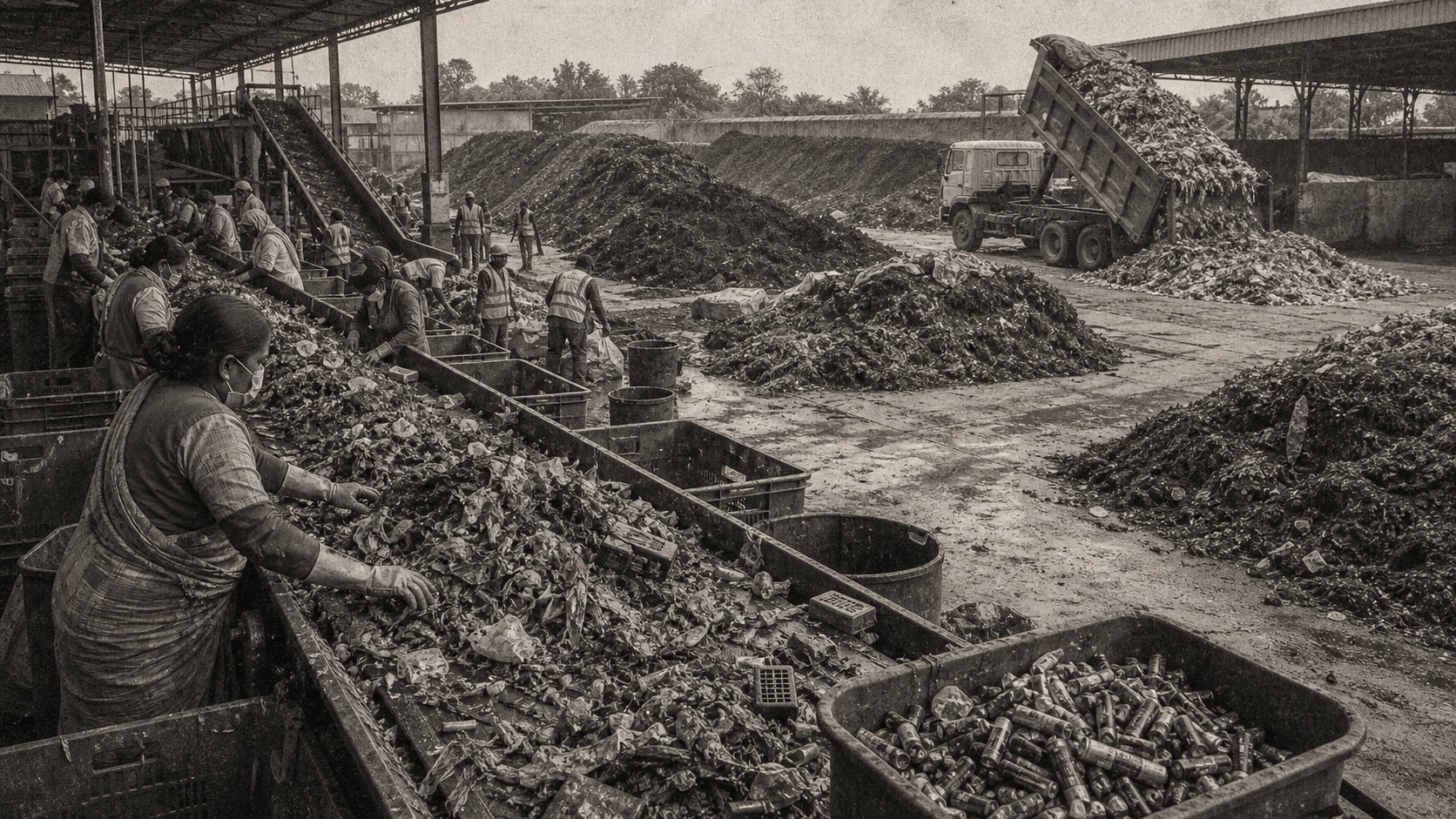
The regulatory hook is direct. India's SWM Rules 2016 set compost limits including As 10, Cd 5, Cr 50, Cu 300, Pb 100, Hg 0.15, Ni 50, and Zn 1000 mg/kg, and restrict compost above those limits from food-crop use.
The best pilot is a batch-polishing unit at a centralized compost or CBG facility in a large state market. Measure incoming feedstock, rejects, matured compost, digestate solids, liquid/process streams, and final compost against regulatory limits and buyer acceptance.
2. Italy
High confidence · Best EU proof marketItaly is the clearest EU validation target because its source-separated organics system is large and unusually well documented. ISPRA's Rapporto Rifiuti Urbani, Edizione 2025 reports 2024 municipal waste production of 29.93 Mt, total separate collection of 20.26 Mt, and a source-separated organic fraction of 7.67 Mt.
ISPRA reports 344 operational biological-treatment units dedicated to source-separated organics in 2024: 250 composting plants, 66 integrated anaerobic/aerobic plants, and 28 anaerobic-digestion plants. Its Catasto Rifiuti portal provides official plant and regional data.
The Italian use case is narrower than India's but cleaner for EU credibility: quality insurance for OFMSW plants, polishing of reject-prone batches, treatment of fine fractions or process water, and digestate/compost acceptance in premium soil markets.
3. Spain
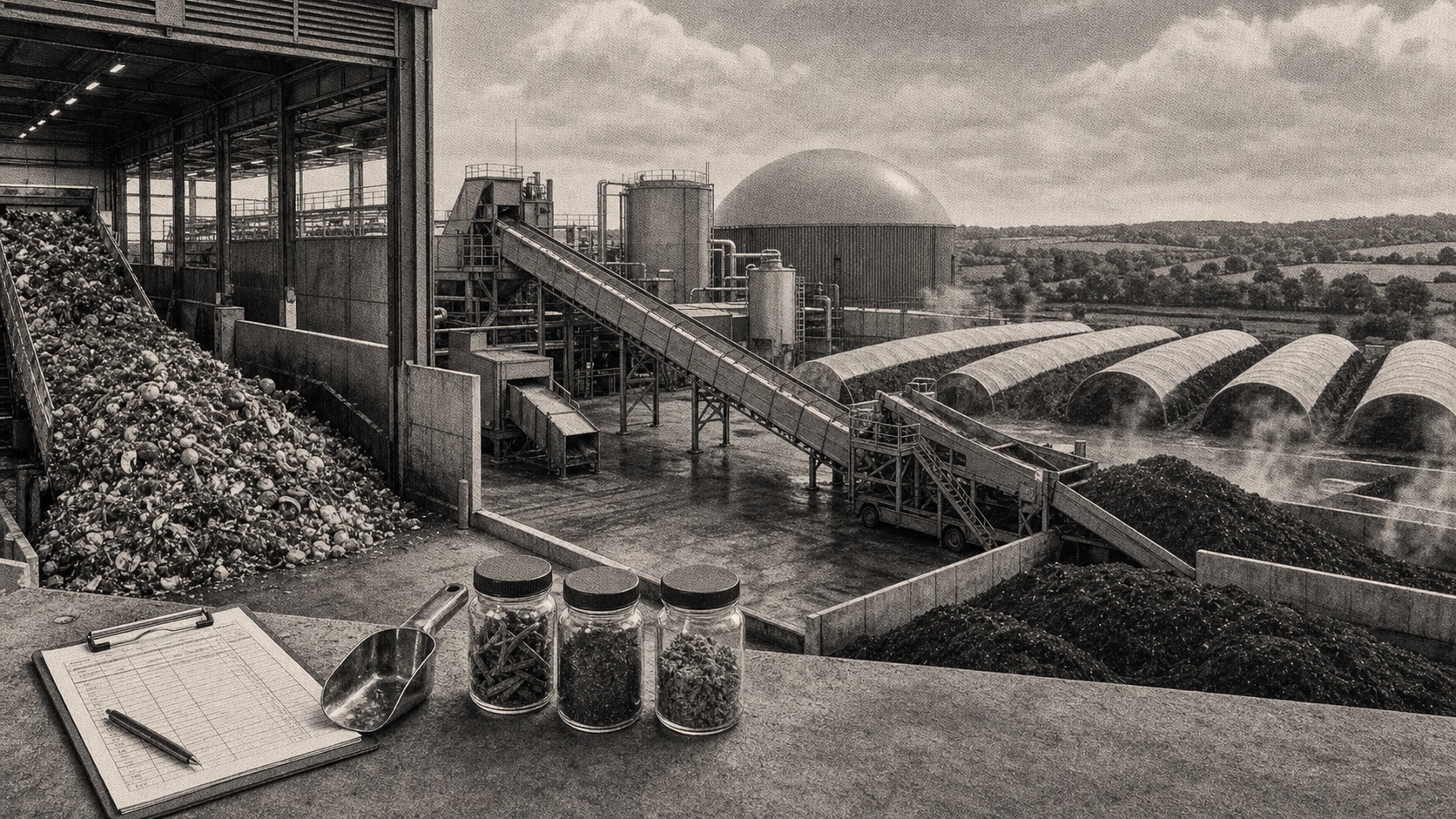
Medium-high confidence · Rollout gapSpain's Law 7/2022 requires separate biowaste collection and recycling, with priority treatment through composting, anaerobic digestion, or both. It also creates quality pressure by limiting improper materials in separately collected biowaste: 20% from 2022 and 15% from 2027.
Eurostat's municipal-waste reporting obligation dataset reports Spain's 2023 municipal biowaste generation at 184.2 kg/person, or 8.906 Mt, while separately collected municipal biowaste was only 34.8 kg/person, or 1.685 Mt. Source: Eurostat env_wasobl Spain 2023.
Eurostat's 2024 treatment dataset reports Spain's municipal waste generation at 456 kg/person, landfill and other disposal at 216 kg/person, recycling at 194 kg/person, and composting/digestion at 96 kg/person. Source: Eurostat env_wasmun Spain 2024.
Spain's Real Decreto 506/2013 sets heavy-metal classes for organic fertilizer products. That gives a metal-leaching pilot a concrete value proposition: move product into a higher class or avoid restricted use.
4. Germany
Medium confidence · Benchmark marketGerman law requires public waste-management bodies to collect household biowaste separately under KrWG section 20. BGK, citing provisional Destatis data, reports about 10.75 Mt of separately collected household organic bio-waste in 2024, equal to 128 kg/person and 28% of municipal waste. Source: BGK Bioabfall.
BGK's quality-assurance network, status February 2026, includes 609 compost plants under RAL-GZ 251 and 155 digestate plants under RAL-GZ 245. Source: BGK Zahlen und Fakten.
Germany's BioAbfV section 4 sets heavy-metal limits for treated biowaste and requires testing per started 2,000 t fresh mass and at least every three months. This makes Germany a quality-assurance benchmark, not necessarily the first mass-market pain point.
5. France
Medium confidence · Second waveFrance generalized source sorting of biowaste from 1 Jan 2024 for households, professionals, administrations, and local authorities. The French Ministry of Ecological Transition identifies composting and methanization as the main valorization routes, with compost and digestate returning organic matter and nutrients to soils. Source: French ministry biowaste page.
Eurostat reports France's 2023 municipal biowaste generation at 152.1 kg/person, or 10.396 Mt, and separately collected municipal biowaste at 77.4 kg/person, or 5.293 Mt. Source: Eurostat env_wasobl France 2023.
ADEME provides implementation guidance for separate collection and professional food-waste sorting through its food-waste sorting infographic and professional biowaste sorting cost guide. France is attractive after the 2024 rollout produces more facility-level contamination and offtake data.
The Papers That Matter
The research base splits into two piles: evidence that metals occur in municipal compost and digestate, and evidence that leaching or fractionation can reduce them without destroying the fertilizer value.
| Paper | Feedstock relevance | Why it matters |
|---|---|---|
| Saha, Panwar, Singh 2010 · DOI | Indian municipal solid waste compost | India-specific compost quality and quality-control-index evidence. |
| Khare et al. 2024 · Scientific Reports | Delhi MSW compost | Direct evidence that GLDA leaching can remove Cd, Cu, Pb, and Zn from contaminated MSW compost. |
| Kupper et al. 2014 · DOI | Source-separated compost and digestates | Broad EU-style anchor for metals in source-separated compost/digestate. |
| Yu et al. 2011 · DOI | MSW compost | Useful source-analysis and trace-metal methodology paper. |
| Pecorini et al. 2020 · DOI | MSW compost/digestate mixtures | Italy-relevant circular-economy use case for compost and digestate mixtures. |
| Pognani et al. 2012 · DOI | Combined AD/aerobic source-separated waste plant | Strong integrated-plant process evidence for Spain and Italy-style systems. |
| Sharifi and Renella 2015 · DOI | MSW compost remediation/pre-treatment | Shows particle-size fractionation as a lower-tech route to reduce metals, salinity, and impurities. |
The Go-To-Market Sequence
Start in India because the problem is sharp enough for a startup: high volume, incomplete sorting, policy-backed compost/CBG infrastructure, and a direct barrier to food-crop use when metals exceed limits.
Use Italy for EU credibility. It has official plant data, large OFMSW processing capacity, and mature compost/digestate markets. Spain follows where separate biowaste collection is scaling. Germany is a QA benchmark. France is a second-wave market once source-sorting rollout produces stronger facility-level contamination and offtake data.
| Stage | Market | Outcome to prove |
|---|---|---|
| 1 | India | Pass SWM Rules thresholds while preserving NPK, organic carbon, pH, and germination performance. |
| 2 | Italy | Reduce Cd/Pb/Cu/Zn/Ni/Cr risk in compost, solid digestate, liquid digestate, or fine fractions with closed-loop leachate handling. |
| 3 | Spain | Upgrade fertilizer class or avoid use restrictions as separate collection scales. |
| 4 | Germany | Prove quality-assurance performance against a mature testing regime. |
| 5 | France | Use source-sorting rollout data to target the facilities with real quality/offtake pain. |
Claims To Avoid
- Do not claim 100% certainty. Facility-level assays decide the actual pilot economics.
- Do not claim toxic metals create major resale revenue. Copper and zinc may carry value; cadmium, lead, mercury, and arsenic mostly create disposal liabilities.
- Do not claim every compost plant needs leaching. Mature source-separated plants may already pass limits.
- Do not use sewage-sludge or manure-only studies as proof for municipal organics. They are adjacent, not equivalent.
- Do not pitch leaching without a closed-loop leachate plan. Acidic or chelated liquor disposal can destroy the business case.
This article is adapted from the internal research file docs/research/municipal-organics-metal-leaching-country-report.md. That Markdown file is the source-of-record for the current evidence table and should be updated before this page if the ranking changes.